Table of contents19 sections
- 1. Barrel sauna construction
- 2. Cabin construction
- 3. Interior space
- 4. Bench configurations
- 5. Heating performance
- 6. Weather resistance
- 7. Insulation
- 8. Installation
- 9. Maintenance
- 10. Aesthetics
- 11. Pricing
- 12. Best applications
- Heating and insulation in practice
- Foundations and access
- Doors, glass and light
- Assembling a barrel vs a cabin
- Doors and privacy
- Deciding in three questions
- At a glance
Outdoor saunas generally come in two shapes: the barrel and the cabin. Both hold a heater and benches; the differences are in usable space, weather behaviour and how easy they are to install.
1. Barrel sauna construction
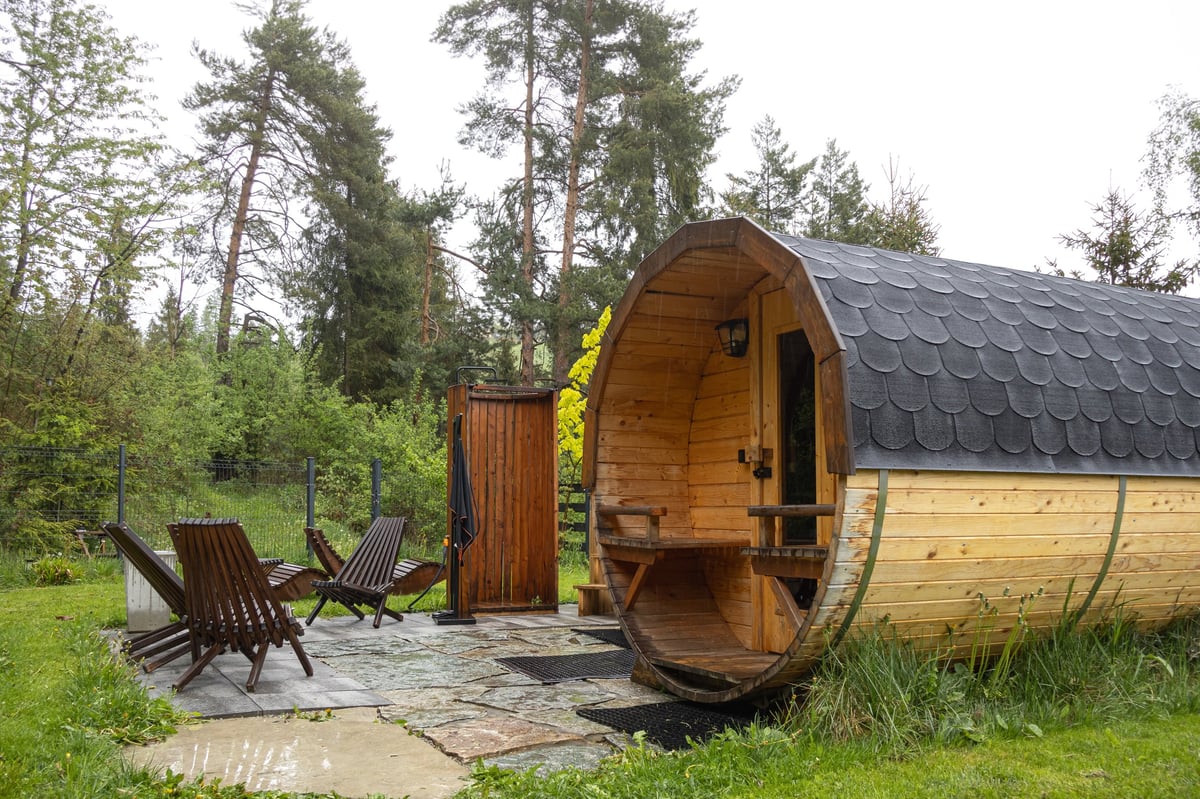
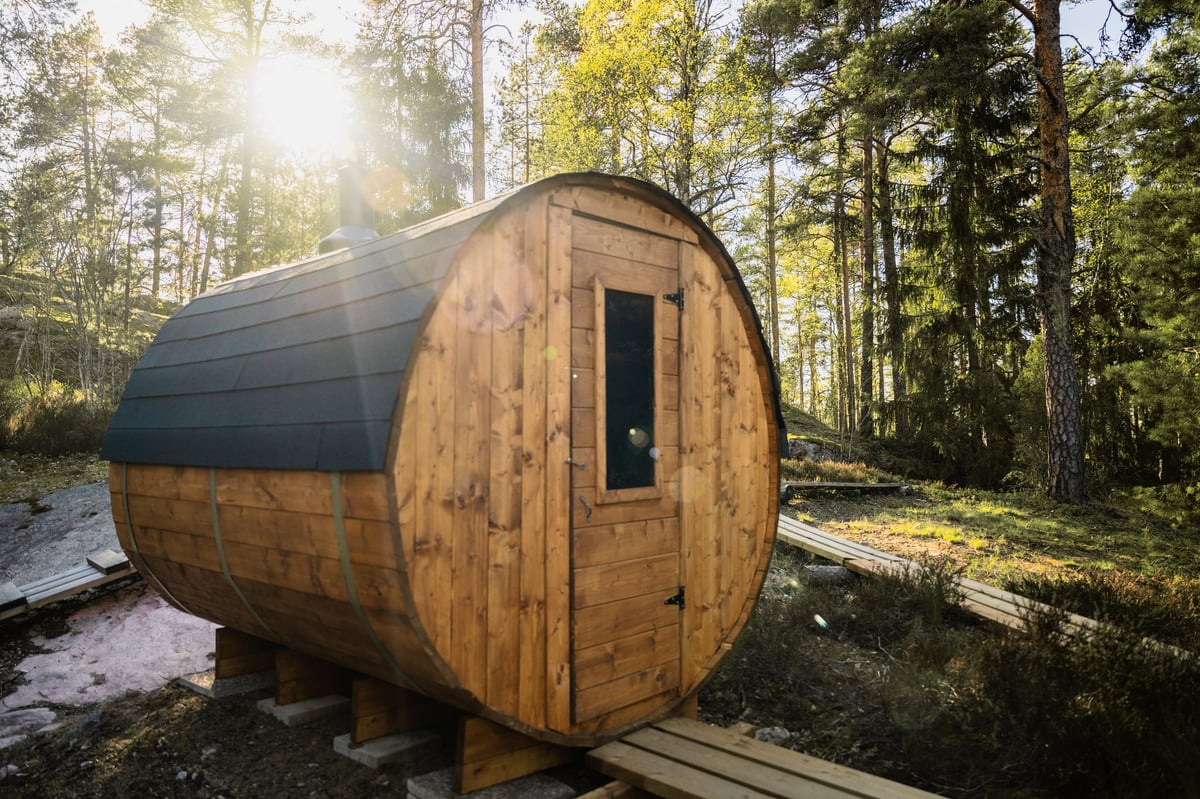
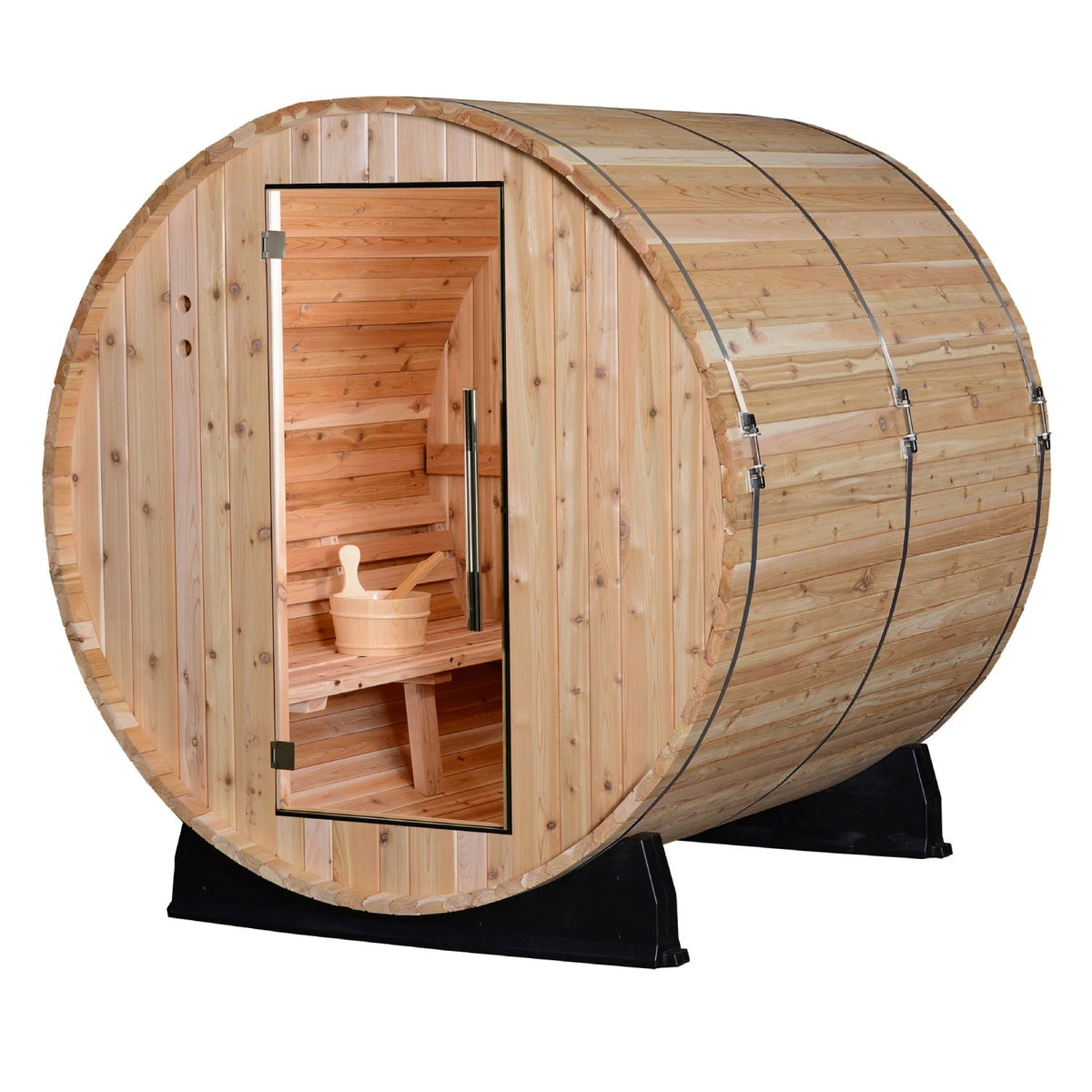
Barrels are made from staves — long timber boards curved into a cylinder and held by steel bands. The round roof sheds water well, and the shape is efficient because it encloses volume with less material. Almost Heaven barrels, for example, use 1-3/8 in ball-and-socket lumber with stainless bands.
2. Cabin construction
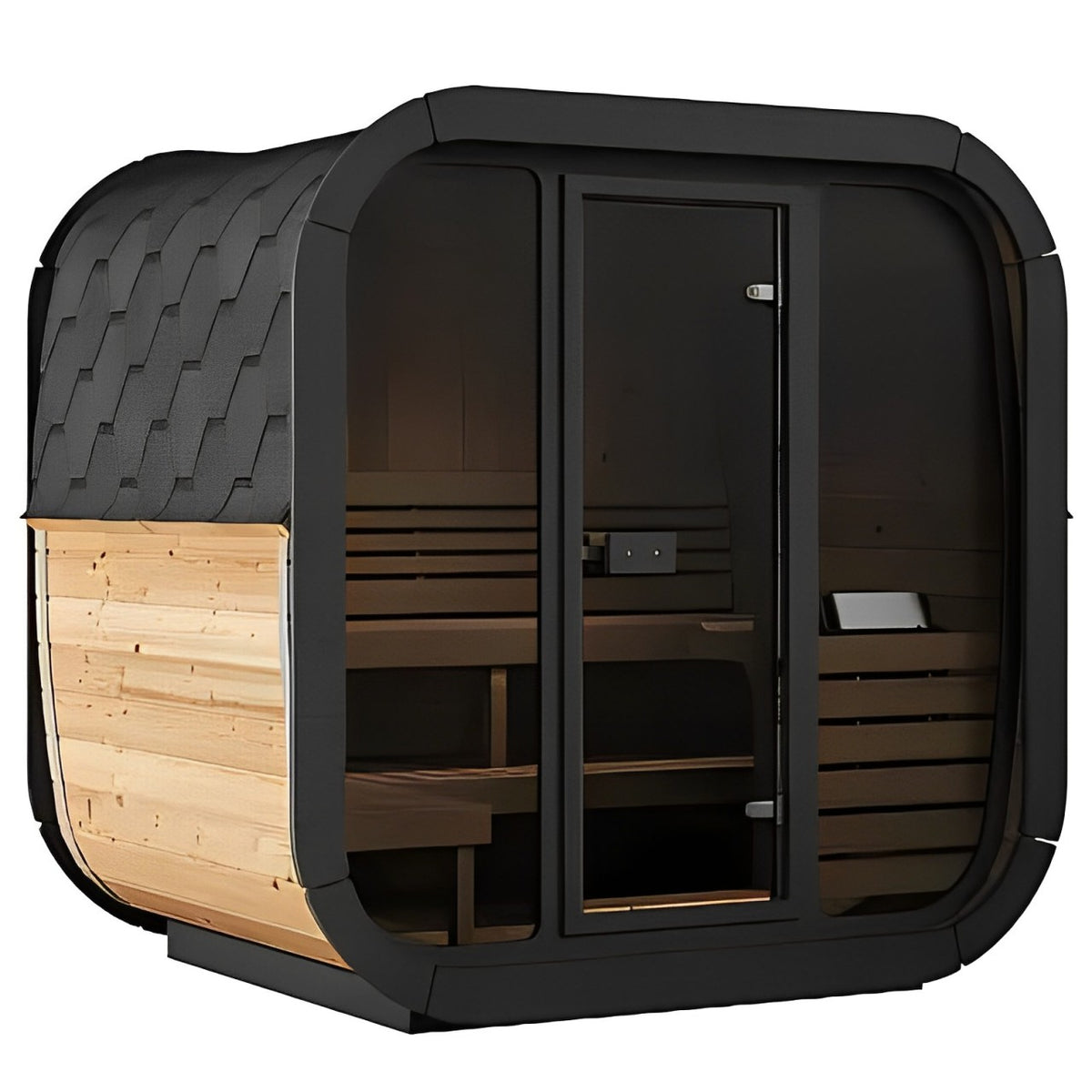
Cabins are built of wall panels or framed walls within a roof. They're more like small buildings: flat or pitched roofs, square corners, standard doors. SaunaLife's cube cabins, for instance, use 42mm thermo-spruce walls with a full glass front.
3. Interior space
The crucial difference: a barrel's curved walls reduce head and shoulder room toward the sides, while a cabin gives full rectangular volume. If you want to stand up straight or move around, a cabin is more generous for the same footprint.
4. Bench configurations
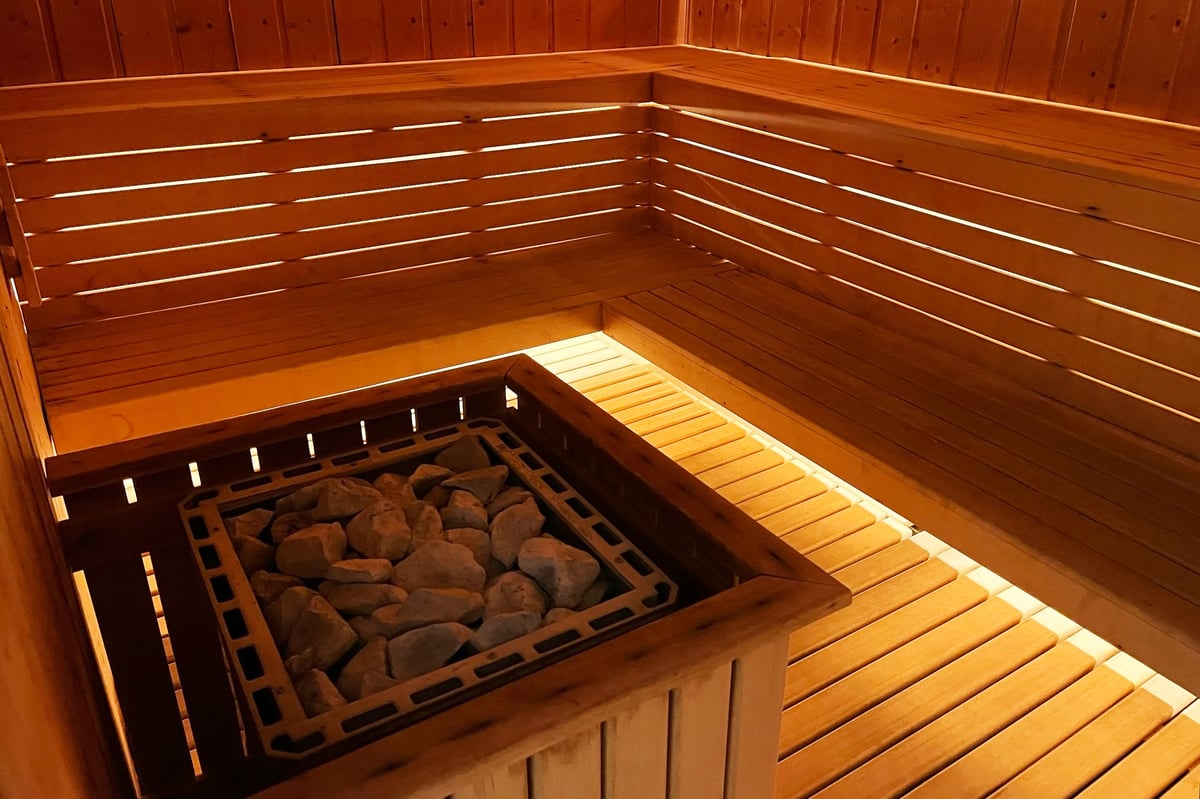
Barrels typically use two benches facing each other along the length. Cabins can offer straight, two-tier or L-shaped benches, with more freedom over layout.
5. Heating performance
The round shape helps a barrel heat efficiently and circulate air. Cabins with large glass surfaces lose more heat and may need a larger heater; they also need good ventilation.
6. Weather resistance
Barrel roofs shed rain by shape; cabin roofs need proper covering and flashing. Both need well-treated timber. Look at the roof material and door seals in the listing.
7. Insulation
Cabin walls can take insulation more easily; barrel stave thickness is usually fixed. For cold climates, a thicker-walled cabin may hold heat better between sessions.
8. Installation
Barrels often ship as kits that two people can erect in hours on a level base. Cabins can be quicker to assemble from panels but may need more base preparation and lifting help.
9. Maintenance
Both need periodic exterior treatment. Barrels need band tension checked over time; cabins have more joints and roof details to keep weatherproof.
10. Aesthetics
Barrels are rustic, distinctive and compact-looking. Cabins look more architectural; glass-front models in particular read as modern extensions to a garden.
11. Pricing
Barrels are often good value because they're simple and efficient. In our catalog the two-person Salem barrel is $4,176 and the four-person Pinnacle $5,303, both with heater and stones included. Cabin pricing depends heavily on whether a heater is included — the CL5G cabin is $5,990 before you add a heater and $950 freight.
12. Best applications
- Barrels: wooded gardens, smaller yards, couples and families wanting classic sauna.
- Cabins: sites with a view, modern landscaping, buyers wanting more headroom and glass.
- Barrels win when the site is tight and the budget matters.
- Cabins win when comfort, headroom and architectural looks are priorities.
Heating and insulation in practice
A round barrel encloses its volume efficiently, so a modest heater can bring it up to temperature — good for running costs. The flip side is that the stave thickness is fixed, so insulation options are limited.
A cabin's flat walls and roof make it easier to insulate and seal, but large glass areas lose heat quickly. If you're buying a glass-front cabin, check the recommended heater for its volume — sometimes the manufacturer upgrades the heater for glazed models.
In cold climates, sitting on cold benches before the room heats is a common complaint. Either allow longer warm-up or choose a cabin with insulation between the wall layers.
Foundations and access
Both shapes need a level base. Barrels are usually lighter and can sit on a compacted gravel pad or decking; large cabins may need a concrete pad.
Think about getting it into position as well as what it sits on. A barrel can often be rolled into place with help; a cabin arrives in panels that fit through gaps but need more assembly time.
Doors, glass and light
Barrels typically have a curved glass door at one end; cabins can have a full glass front that turns the sauna into part of the view. Glass loses heat, and a big glazed area can make a cabin harder to heat than its footprint suggests.
Lighting matters more than people expect — an interior light on a dimmer and a small exterior light make the sauna usable on dark evenings.
Assembling a barrel vs a cabin
Barrel kits typically arrive as pre-curved staves, end sections, benches and bands. Two people can often raise one in a few hours on a level base, tightening the bands as they go. A cordless drill is usually the only tool needed.
Cabin kits vary hugely. A simple cube can be panel-based and quick; a larger cabin with a glass front and roof takes longer and may need extra hands for lifting. Read the assembly time in the manual before you commit to a weekend.
Doors and privacy
Barrels usually have a narrow door at one end, so everyone faces the same way. Cabins can have wider doors and windows, which changes the social feel — good for family use, less private.
Deciding in three questions
- Do you want to be able to stand upright inside? If yes, lean cabin.
- Is the site narrow or ornamental? If yes, a barrel often suits better.
- Are you buying the heater separately? Factor that into cabin pricing before comparing.
At a glance
| Barrel | Cabin | |
|---|---|---|
| Headroom | Tapers at sides | Full rectangular |
| Heating | Efficient round shape | Good, needs venting |
| Assembly | Usually a simple kit | Panels; more base prep |
| Look | Rustic, compact | Architectural, can be glass-front |
| Price | Often better value | Higher, often heater extra |
Frequently asked questions
Is a barrel sauna big enough for a family?+
A 6x6 ft barrel can seat four, but a cabin gives more headroom and flexibility for family use.
Which is warmer, barrel or cabin?+
Barrels heat efficiently due to their round shape; cabins with lots of glass may need a larger heater.
Do barrel saunas need a foundation?+
They need a level, well-drained base — gravel, concrete or decking.
Barrel and cabin saunas in our catalog



SaunaMatch is reader-supported. When you buy through links on this site we may earn a commission from Select Saunas or Sweaty Yeti at no extra cost to you. Prices were verified on 2026-10-30 and can change — always confirm at the retailer.
Ready to compare your options?
Browse verified models side by side — price, capacity, heating and exactly what's included.