Table of contents15 sections
- Electric heaters
- Wood-burning stoves
- Heater sizing
- Controls
- Safety
- Included vs. separate
- Working out your heater size
- Stones and water
- Maintenance and lifespan
- Choosing between brands and models
- Placement and clearance
- Controls, timers and remote heating
- Running costs by heater size
- Which heater suits which cabin
- Heater types compared
Many outdoor cabins in our catalog are sold without a heater — so this is often the buyer's biggest decision after the cabin itself. Get the sizing wrong and you'll struggle to reach temperature, or overshoot it.
Electric heaters
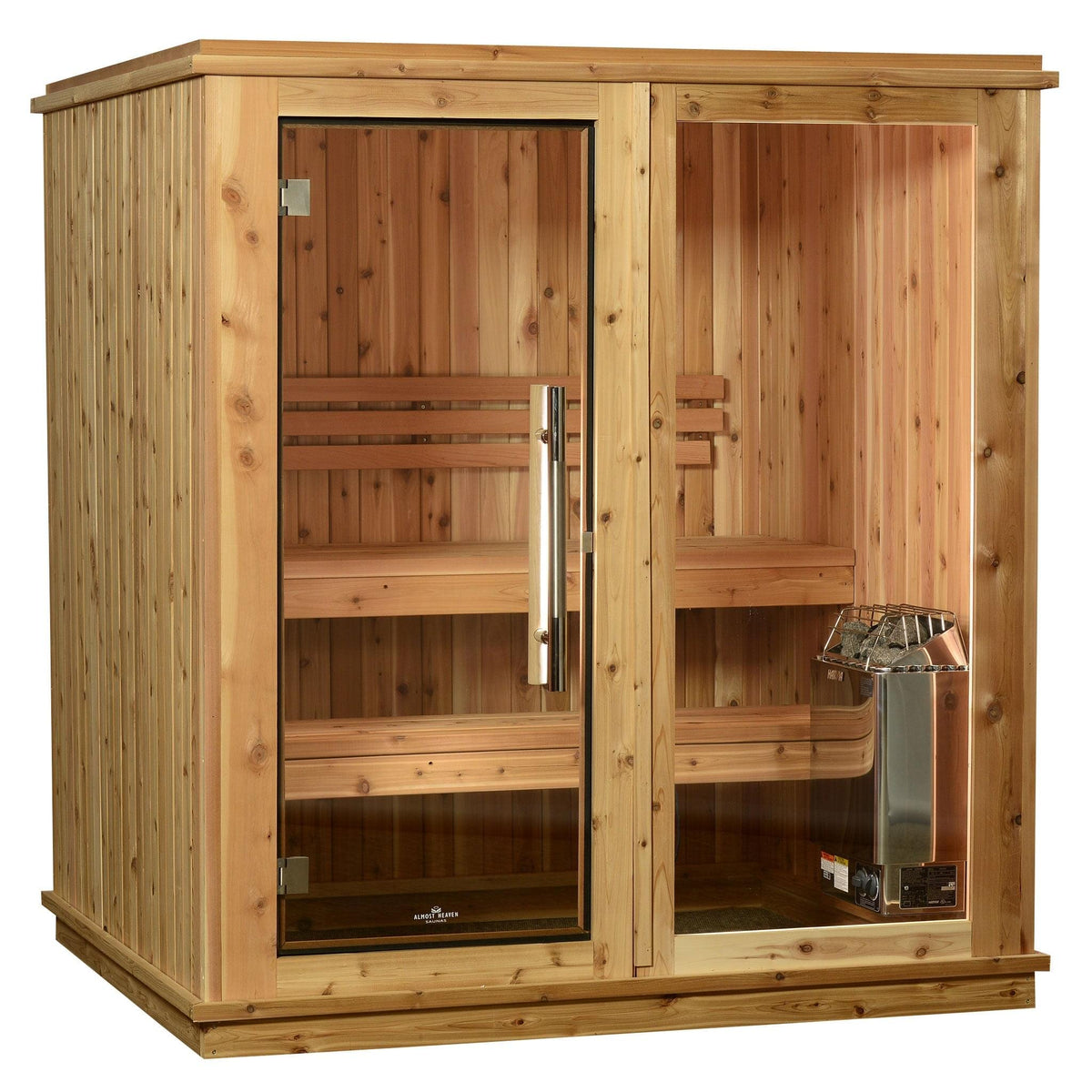
The common residential choice. Electric heaters range roughly from 3 kW to 10 kW-plus depending on cabin size. A 6 kW unit is typical for a two- to four-person cabin; the Almost Heaven barrels come with a 6 kW Harvia. They need the right circuit.
Wood-burning stoves
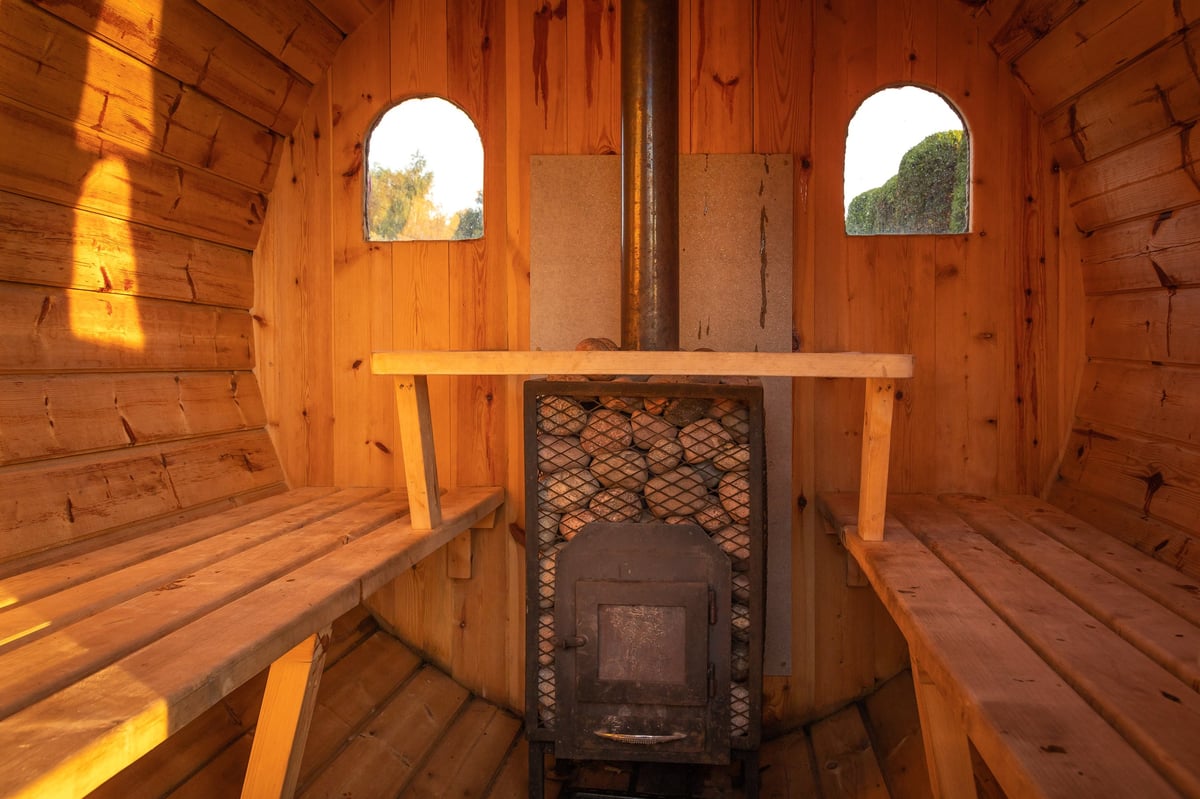
A stove gives the smell and atmosphere of a wood fire and no electrical demand. But it needs a flue, fire clearance, fuel storage and careful installation. Better suited to outdoor builds.
Heater sizing
Heaters are rated by cabin cubic feet/volume, not floor area alone. Calculate volume, then compare to the manufacturer's range. Glass walls lose heat, and uninsulated cabins do too — a heater at the top of its range may be sensible.
Controls
Simple dials, wall controllers and digital/wifi controllers span the range. If you'll heat remotely, a compatible controller is worth checking for at purchase.
Safety
- Follow clearances from the manufacturer.
- Keep combustible materials away.
- Never place water directly onto an electric element.
- Choose heaters with built-in limits and safety features where offered.
Included vs. separate
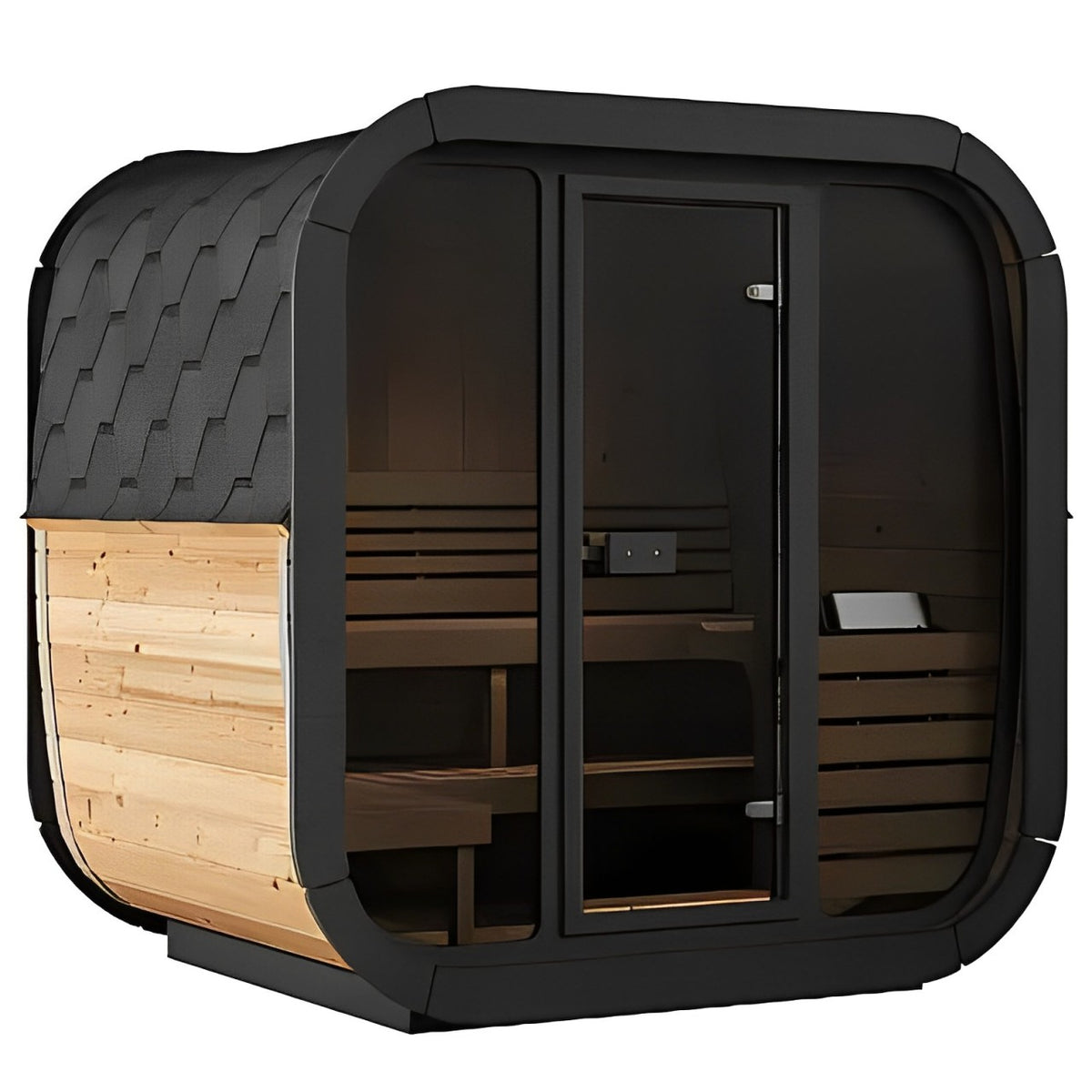
Some saunas ship with the heater and stones included; others don't. Check the listing carefully — the difference in total price can be over a thousand dollars.
Working out your heater size
Measure the cabin's internal dimensions in feet and multiply to get cubic feet. Then compare that volume with the manufacturer's rated range for the heater — for example, the Harvia Vega Compact 1900 used in the Finnmark FD-4 Trinity is rated for roughly 70–106 cubic feet.
Add margin for large glass areas, poor insulation or cold outdoor use. An undersized heater will run constantly and still feel underpowered; an oversized one heats quickly but can be overpowering in a small room.
Stones and water
Traditional heaters are filled with sauna stones, which hold heat and release it into steam when you ladle water. Stones crack over time and should be replaced. The quantity matters — the manufacturer specifies a minimum weight.
Your first heat should be a short one as the stones and metal settle, with good ventilation. Any odour from new heating elements usually fades after one or two sessions.
Maintenance and lifespan
Electric heaters can last many years with occasional stone replacement and regular inspection. Wood-burning stoves need more attention — ash removal, flue checks, and appropriate fuel.
A heater that trips the breaker, smells like burning or struggles to reach temperature should be checked by an electrician or the manufacturer's service team before continued use.
Choosing between brands and models
Within electric heaters, different brands favour different looks and features — open stones for steam, enclosed housings for safety, wall-mounted for saving floor space. The practical differences matter more than brand prestige.
Look for models with clear documentation, compatible controls and readily available replacement stones. A heater that's easy to service will last longer and cost less in the long run.
Placement and clearance
Heaters need clearance from benches and walls, and must sit where they won't be kicked or splashed with cold water. Follow the manufacturer's minimum distances exactly.
If you're placing the heater near the door, check you can enter without reaching over it. A heater guard is a good idea when children will be present.
Controls, timers and remote heating
A wall controller or digital timer lets you switch on the heater before you get home, so it's ready when you walk in. This is especially useful outdoors, where warm-up takes longest.
If remote heating is important, confirm the heater and controller are compatible before you buy. Some heaters have built-in controls; others need a separate controller with its own wiring.
Running costs by heater size
A heater's running cost scales roughly with its power and session length. A 6 kW heater drawing for an hour consumes about 6 kWh; a 3 kW heater about 3 kWh. Smaller rooms need smaller heaters and cost less per session.
That's one reason to size the heater to the room rather than buying the biggest available — bigger means more draw, not just more heat.
Which heater suits which cabin
- Compact 1-2 person cabin: a 3-4.5 kW electric heater.
- Typical 2-4 person barrel: around 6 kW is common.
- Larger cabins with glass: size up for heat loss.
- Outdoor with no power: wood-burning stove with a flue.
Heater types compared
| Electric heater | Wood-burning stove | |
|---|---|---|
| Power needed | Dedicated circuit | None |
| Fuel | Electricity | Wood |
| Extras | Controller or timer | Flue, fire clearance, storage |
| Best for | Indoor and outdoor cabins | Remote or rustic outdoor sites |
Frequently asked questions
How do I size a sauna heater?+
Measure the cabin's cubic volume and compare it to the heater's rated range. Add margin for glass and poor insulation.
Can I use a wood-burning stove indoors?+
It's uncommon and requires careful planning for flue, fire clearance and local regulations. Most wood-burning saunas are outdoors.
Are stones included with heaters?+
Often not. Check the listing — stones are frequently sold separately or included with the sauna.
Saunas with heaters included

SaunaMatch is reader-supported. When you buy through links on this site we may earn a commission from Select Saunas or Sweaty Yeti at no extra cost to you. Prices were verified on 2026-10-30 and can change — always confirm at the retailer.
Ready to compare your options?
Browse verified models side by side — price, capacity, heating and exactly what's included.